Pilot launching in Guruve District, Zimbabwe
Home About FAQ Request Access Volunteer
AI · Offline-First · Rural Zimbabwe

AI-powered health support for Zimbabwe's frontline workers

HOTO equips Village Health Workers with a localized AI health companion, combining RAG-powered diagnosis, offline intelligence, and solar-powered reliability to deliver knowledge-enabled care at the last mile.
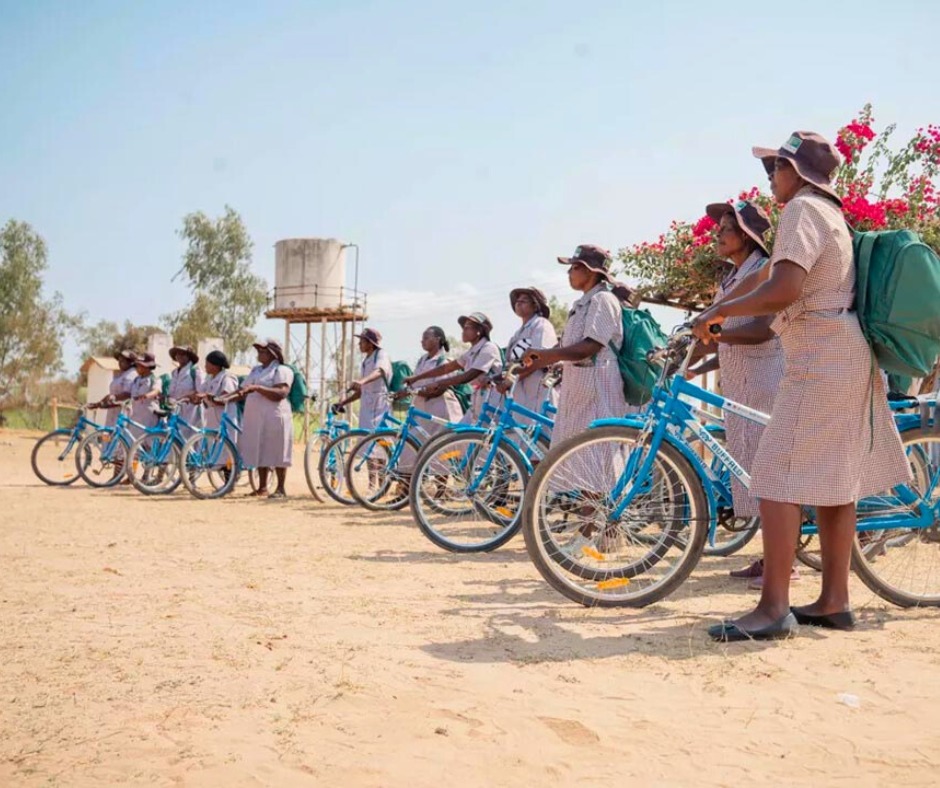
VHW using HOTO in the field
VHW in the field — Guruve District, Zimbabwe

Rural Zimbabwe’s healthcare gap

High mortality from preventable diseases persists because frontline workers lack the tools to act fast and accurately.

153,600+
people served in some districts like Guruve District served by just one hospital ; with VHWs as the primary frontline link
100+
community members per VHW without adequate tools, real-time guidance, or connectivity
70%
of Zimbabweans live in rural areas where malaria, HIV, TB and chronic illness go undetected too late
Four pillars of the solution
🤖

RAG-powered AI diagnosis

A localized Retrieval-Augmented Generation LLM trained on Zimbabwe-specific clinical data — delivering interactive symptom assessment, diagnosis, triage, and referral guidance.

📡

Offline edge computing

An edge gateway with NVMe storage processes AI locally and syncs to the cloud when connectivity returns — ensuring uninterrupted access in network-poor villages.

☀️

Solar-powered hub

Solar hubs at rural clinics, schools, and council offices power both VHW devices and the edge gateway 24/7 — no grid electricity required.

📱

USSD fallback (*123#)

VHWs and community members without smartphones can report symptoms, request referrals, and receive health alerts via any basic feature phone.

From one district to a nation

Starting with a pilot in Guruve, HOTO is designed to scale.
Knowledge-enabled care for Zimbabwe’s last mile

Rural communities in Zimbabwe face persistently high mortality rates from preventable diseases — malaria, HIV, tuberculosis, and chronic illnesses — due to limited access to timely, quality healthcare.

In Guruve District alone, over 153,600 people are served by just one hospital, with most residents depending entirely on Village Health Workers who lack adequate tools, training, and real-time decision support. HOTO exists to change that.

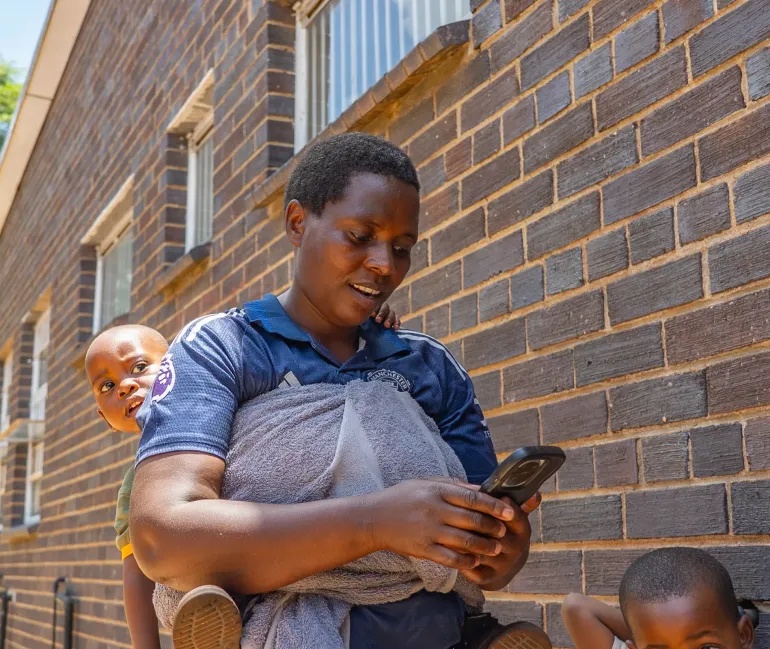
HOTO field image
A VHW accessing health information on her mobile device
What is HOTO?
A mobile & web app for Village Health Workers

HOTO is a mobile and web-based digital health application designed specifically for Zimbabwe’s Village Health Workers. It is downloadable from the Google Play Store and Apple App Store, and also accessible via browser on any device. For VHWs without smartphones, a USSD platform (*123#) ensures no one is left behind.

Powered by a localized AI engine trained on Zimbabwe’s clinical protocols and health data, HOTO gives every VHW the knowledge of a trained health professional — instantly, securely, and even without internet access.

📱 Mobile App (Android & iOS) 🌐 Web App (PWA) ☎️ USSD *123# (Feature phones)
Three steps to better care
1

Secure login

Each VHW logs in using a unique QR code or login identifier verified through the Ministry of Health and Child Care (MoHCC) database — ensuring only authorised personnel access the system.

2

AI diagnosis & triage

The VHW inputs patient symptoms. HOTO’s AI asks clarifying questions and returns step-by-step diagnostic support, triage recommendations, and treatment guidance aligned with Zimbabwe’s clinical protocols.

3

Digital referral & sync

HOTO automatically generates a referral summary sent to the nearest clinic or hospital. All data syncs to the cloud when connectivity returns, ensuring continuity of care.

Built for the last mile
🤖

RAG-powered AI diagnosis

A localized RAG LLM trained on Zimbabwe-specific clinical protocols. Supports symptom assessment, disease diagnosis, treatment, triage, and referral guidance grounded in local health data.

💬

Interactive symptom assessment

HOTO engages VHWs through clarifying questions. If a patient presents with fever and low appetite, HOTO may ask: “Are they also experiencing diarrhoea?” — improving diagnostic accuracy step by step.

📡

Offline edge computing

A local edge gateway with NVMe storage processes data and hosts AI models offline. Clinical protocols and outbreak alerts remain accessible even with zero connectivity, syncing when available.

📋

Digital referrals

Automatically generated referral summaries sent to local clinics or hospitals, with tracking for continuity of care. Includes guidance on which patients to treat locally versus escalate.

📊

Case tracking & data collection

VHWs can take notes and track cases by category, location, and count — enabling comprehensive data collection, better record-keeping, follow-up, and district health surveillance.

🚨

Outbreak alerts & notifications

Real-time alerts on trending diseases or outbreaks in the area or neighbouring regions — supporting proactive community education and preventive measures.

📚

Training modules

On-device training resources for VHWs, accessible offline — covering disease management, clinical protocols, and community health education. Updated when the device syncs.

🤝

Peer collaboration

Group chat functionality enables VHWs to seek advice and share insights with peers and supervisors — fostering knowledge sharing and reducing isolation in remote settings.

☎️

USSD via basic phones

Dial *123# from any feature phone to access health info, report symptoms, or request referrals — no smartphone needed. Implemented with Econet, NetOne, and Telecel via POTRAZ.

How we’re solving the problem

Our project aims to improve universal healthcare outcomes and reduce mortality from preventable diseases in Guruve district by addressing critical gaps faced by Village Health Workers. We are developing a localized Retrieval-Augmented Generation (RAG) LLM with a user-friendly interactive interface — providing improved and faster diagnosis support by leveraging Zimbabwe-specific training materials, including information on nearby clinics, symptom assessment, disease diagnosis, treatment, referral, and triage guidance.

The system also provides alerts and notifications on trending diseases or outbreaks in the area or neighbouring regions, supporting proactive community education and preventive measures. VHWs can take notes and track cases by category, location, and count, facilitating comprehensive data collection, better record-keeping, and follow-up.

Ongoing work includes refining the outbreak alert integration, enhancing offline performance, and optimising user experience through field feedback. Future iterations will leverage AI to enable VHWs to interact in the local language, Shona, further enhancing accessibility and usability across rural communities.

To ensure reliable operation in the low-connectivity environment of Guruve, a solar-powered hub provides a sustainable energy source supporting an edge gateway with NVMe storage for local processing and a cloud integration layer for data synchronisation whenever connectivity is available. This hybrid setup balances speed, privacy, and accessibility — making advanced health intelligence available at the last mile.

The solar system powers both the hub and VHW devices, ensuring 24/7 access to AI-driven health support and empowering VHWs to work effectively without worrying about battery or electricity constraints. This allows the VHW to function offline with cached data, ensuring continuous access to AI-driven health support even in low-connectivity areas.

“By combining near real-time guidance, data tracking, alerts, collaboration, and offline functionality, the interface strengthens rural healthcare capacity and improves overall health outcomes in Zimbabwe.”

— HOTO Project Team, BayFive Technologies
What we set out to achieve
  • 1
    Empower Village Health Workers with real-time AI-driven diagnostic and treatment support.
  • 2
    Improve referral efficiency through automated, trackable digital referral tools.
  • 3
    Enhance community health data collection and reporting for evidence-based decision-making.
  • 4
    Ensure operational reliability in low-power, low-connectivity environments through solar hubs and offline data storage.
  • 5
    Strengthen collaboration between the Ministry of Health, ICT partners, and telecom operators to build a sustainable national digital health platform.
The impact we’re building toward

Improved diagnosis & early detection

Faster, more accurate disease identification at community level — reducing the gap between symptom onset and treatment for malaria, HIV, TB, and chronic conditions.

Reduced preventable deaths

Timely referrals and evidence-based treatment guidance directly reduce mortality from diseases that are manageable when caught early.

Real-time health data for districts

Structured case tracking feeds district and national surveillance systems — enabling evidence-based resource allocation and outbreak response.

Empowered, motivated VHWs

Better tools reduce burnout and improve retention. HOTO makes the VHW role a desirable, high-impact position within rural communities.

Increased health-seeking behaviour

Communities with faster, more informed care are more likely to engage with health services early — reversing the decline seen in underserved rural areas.

Stronger institutional coordination

Improved collaboration between MoHCC, ICT partners, and telecom operators — building the foundation for a sustainable national digital health platform.

HOTO is designed and developed by BayFive Technologies — a multidisciplinary technology team combining expertise in AI engineering, software development, biotechnology, research sciences, and renewable energy infrastructure.

The team brings together AI and software engineers leading the design and development of the AI-driven app, biotechnology and research science experts championing stakeholder engagement and community health needs, and an energy engineer responsible for designing the solar-powered hub.

Our impact is made possible by this multi-skilled foundation — ensuring seamless integration, offline functionality, user-friendly interfaces, and a reliable energy backbone, all tailored for Village Health Workers in Zimbabwe.

💻
AI & Software Engineering
App design, AI integration, offline functionality
🔬
Biotechnology & Research Sciences
Stakeholder engagement, clinical best practices
☀️
Energy Engineering
Solar hub design for off-grid reliability
🌍 UN SDG 3 — Good Health & Well-being

Aligned with Zimbabwe’s National Development Strategy

HOTO directly contributes to improved community healthcare, disease surveillance, and universal health coverage — supporting Zimbabwe’s National Development Strategy and the UN’s global well-being goals.

“HOTO is more than a mobile app ; it is a digital health companion for Zimbabwe’s frontline workers. By equipping VHWs with intelligent, solar-powered, and offline-capable tools, HOTO brings AI-driven healthcare to the last mile, ensuring that every Zimbabwean — no matter where they live — can access quality healthcare on time, every time.”

We seek the support and partnership of the Government of Zimbabwe, the Ministry of Health and Child Care, the Ministry of ICT, and development partners to pilot, refine, and scale this transformative solution nationwide.

Frequently asked questions

Everything you need to know about HOTO — for communities, health workers, partners, and government.

For communities

What is HOTO and how does it help my community?

+
HOTO is a digital health app that gives your Village Health Worker access to AI-powered medical guidance, treatment protocols, and referral tools. This means faster, more accurate health decisions for you and your family — even in areas without internet or electricity.

Is HOTO free to use?

+
HOTO is provided free of charge to Village Health Workers and the communities they serve. It is designed as a public health tool, supported through government partnerships and donor funding.

What languages does HOTO support?

+
HOTO is being developed to support Shona, Ndebele, and English. Shona language AI interaction is currently in development, prioritised as a core feature for future releases.

Do I need a smartphone to use HOTO?

+
No. While HOTO is available as a mobile app, community members and VHWs without smartphones can access key features by dialling *123# from any basic feature phone using our USSD platform.
For Village Health Workers

How do I register and get my login code?

+
VHWs are registered through the Ministry of Health and Child Care (MoHCC). Once registered, you will receive a unique QR code or login identifier that gives you authorised access to the HOTO system.

Does HOTO work without internet?

+
Yes. HOTO is built offline-first. Treatment guidelines, training materials, and outbreak alerts are stored on your device and the local edge gateway. Everything syncs automatically when you have connectivity.

How do I send a referral through HOTO?

+
After completing an AI-assisted consultation, HOTO automatically generates a referral summary. You can review it and send it directly to the nearest clinic or hospital. The referral is tracked and visible to receiving facilities.

Where is my nearest solar hub?

+
Solar hubs are installed at existing public facilities within each VHW catchment area — typically at rural clinics, schools, or local council offices. Your district health office will inform you of your nearest hub location during onboarding.
For partners & government

How does HOTO align with Ministry of Health protocols?

+
HOTO’s AI is trained on Zimbabwe’s local clinical protocols and MoHCC-approved data sources. All diagnostic guidance, treatment recommendations, and referral pathways are aligned with national health standards.

What data is collected, and how is it protected?

+
HOTO collects anonymised patient case data, VHW activity logs, and community health metrics. All data is stored with encryption, processed locally on the edge gateway, and synced to a secure cloud environment governed by Zimbabwe’s data protection regulations.

How does USSD integration work with POTRAZ?

+
HOTO partners with Econet, NetOne, and Telecel to secure a dedicated USSD short code (e.g. *123#), approved and regulated by POTRAZ. Once approved, the code is integrated directly into HOTO’s backend, enabling feature-phone access across all networks.

What is the national scale plan?

+
HOTO begins with a pilot in Guruve District (4 VHWs, 400+ villagers). Following validation and MoH approval, the plan scales district-by-district, targeting 56,000 villagers in the first phase and ultimately reaching all 11.5 million Zimbabweans through existing government health structures and strategic partnerships.

Apply for HOTO in your district

For health facilities, district offices, NGOs, clinics, and government bodies. We review all applications within 5 working days.

✓ Thank you for your request — we’ll be in touch within 5 working days.

Help us reach the last mile

HOTO is built by a passionate multidisciplinary team. We’re looking for skilled contributors who believe technology can transform rural health in Zimbabwe and beyond.

Find your role
💻

Software developer

PWA, edge systems, AI integration, USSD

🏥

Healthcare professional

Clinical protocol review and validation

🤖

Data scientist / AI trainer

Local health data, model training, evaluation

🔬

Community health researcher

Field insights, needs assessment, documentation

🌍

Field tester / VHW liaison

On-ground testing, VHW feedback, usability

Join the team
✓ Welcome to the HOTO community! We’ll be in touch soon.